

Description
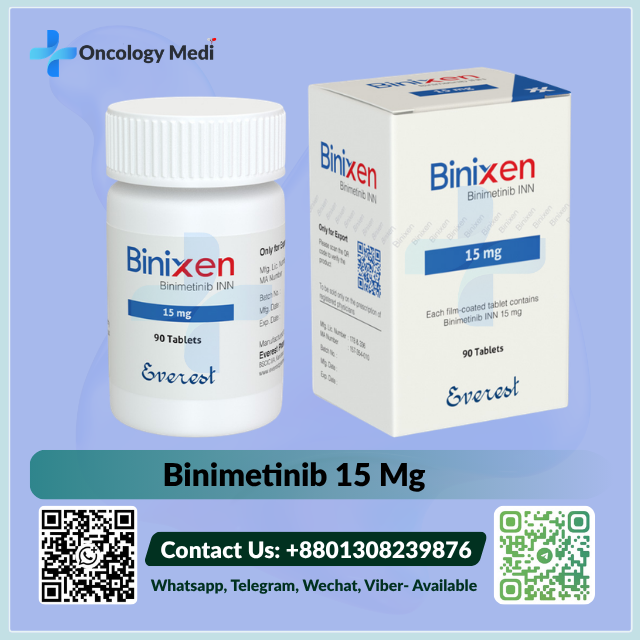
Binixen 15 Mg (Binimetinib) Tablets contain binimetinib, a prescription medicine used as part of certain cancer treatment plans. Binimetinib belongs to a group of medicines called MEK inhibitors. It works by blocking signals that help some cancer cells grow and survive.
Binimetinib is commonly used with encorafenib for certain cancers with specific BRAF gene changes. The treatment plan depends on the cancer type, mutation status, previous treatment, and the patient’s health. The approved uses and dosing instructions may vary by country.
This page explains Binixen 15 Mg, its active ingredient, uses, dosage, side effects, and important precautions. It also covers general product information and pharmacy guidance.
Binixen 15 Mg is a prescription medicine. Patients should use it only under the supervision of a qualified oncology team. Do not begin treatment, change the dose, or stop treatment based only on information from this page.
Binimetinib is also known by the brand name Mektovi in certain markets. Binixen is a separate brand name and should be verified against its official packaging and prescribing information.
Key Benefits
Binimetinib may provide the following treatment benefits when prescribed for an appropriate patient:
- Blocks MEK1 and MEK2 signaling in the MAPK pathway.
- Helps reduce abnormal growth signals in certain cancer cells.
- Forms part of combination treatment with encorafenib for approved indications.
- Offers an oral treatment option in suitable patients.
These are pharmacological and treatment-related benefits. They do not mean the medicine cures cancer or works for every patient.
Active Ingredient
Each Binixen 15 Mg tablet is identified as containing 15 mg of binimetinib, according to the supplied product name and the manufacturer listing for Binixen. The official Everest product directory lists Binixen as binimetinib INN 15 mg.
Before publication, verify the exact composition, inactive ingredients, and packaging from the current Binixen product documentation.
How Binimetinib Works
Binimetinib is a selective inhibitor of MEK1 and MEK2. These proteins form part of the MAPK signaling pathway, which helps regulate cell growth and division.
Some cancer cells have changes in genes involved in this pathway. For example, BRAF mutations can activate growth signals. Binimetinib blocks MEK signaling, which may reduce downstream signals that support cancer cell growth.
For approved melanoma treatment, binimetinib is used with encorafenib. Encorafenib blocks BRAF, while binimetinib blocks MEK. The combination targets two points in the same signaling pathway.
This explanation describes how the medicine works. It does not predict how an individual patient’s cancer will respond.
Indications and Uses
Binimetinib is approved for specific cancer treatment settings. The exact indication depends on the applicable prescribing information.
BRAF Mutation-Positive Melanoma
Binimetinib is used with encorafenib for certain patients with unresectable or metastatic melanoma that has a BRAF V600E or V600K mutation.
Melanoma is a cancer that develops from pigment-producing cells. Unresectable melanoma cannot be removed completely with surgery. Metastatic melanoma has spread to other parts of the body.
Tumor testing is important before starting treatment. A qualified oncology team determines whether the patient meets the approved treatment criteria.
BRAF V600E Mutation-Positive Non-Small Cell Lung Cancer
The current U.S. DailyMed labeling also includes binimetinib with encorafenib for metastatic non-small cell lung cancer with a BRAF V600E mutation.
The prescribing information requires confirmation of the relevant mutation before treatment. The approved use may differ between countries.
Other Uses
Binimetinib may be studied or used in other treatment settings under specific medical protocols. Do not assume that a use is approved simply because it appears in an online article.
Your oncology team should confirm the diagnosis, mutation status, treatment goal, and approved indication.
Dosage and Administration
Binixen 15 Mg is the tablet strength, not automatically the prescribed daily dose.
For the U.S. approved regimen of binimetinib with encorafenib, the recommended adult dose is 45 mg orally twice daily, approximately 12 hours apart. This equals three 15 mg tablets per dose when using 15 mg tablets. The prescribed dose may differ for specific medical conditions or dose adjustments.
The official label provides the following general instructions:
- Take binimetinib by mouth.
- Take it with or without food.
- Follow the exact schedule given by your oncology team.
- Do not change the dose without medical advice.
- Do not take an extra dose to make up for a missed dose.
The U.S. label recommends a lower dose of 30 mg twice daily for patients with moderate or severe hepatic impairment. Dose reductions may also be required because of adverse reactions.
How to Take Binixen 15 Mg
- Take the medicine at the prescribed time.
- Swallow the tablet with water.
- Follow the instructions on your prescription label.
- Take the medicine with or without food, as directed.
- Keep a regular schedule to avoid missed doses.
If you miss a dose, follow the instructions in the current prescribing information. The U.S. label says not to take a missed dose within six hours of the next scheduled dose.
If vomiting occurs after taking a dose, do not take an additional dose. Continue with the next scheduled dose unless your oncology team advises otherwise.
Available Strengths
Binimetinib 15 Mg is the product strength supplied for this page.
Binimetinib tablets are available in 15 mg strength in the U.S. Mektovi product labeling. Other brands or markets may have different product presentations.
Do not assume that all binimetinib brands have identical inactive ingredients, packaging, or approved uses.
Available Pack Sizes
The available Binixen 15 Mg pack size has not been independently verified for this page.
The pharmacy should confirm:
- Number of tablets per box.
- Batch or lot number.
- Expiry date.
- Manufacturer details.
- Packaging and seal condition.
- Current prescribing information.
Do not publish a specific pack size or tablet count until it is confirmed from the actual product packaging.
Who Can Use This Medicine?
Binimetinib may be prescribed to eligible adults whose cancer meets the approved treatment criteria.
A qualified oncology team considers:
- Cancer type and stage.
- BRAF mutation test results.
- Previous treatments.
- Heart function.
- Liver function.
- Other medical conditions.
- Current medicines.
- Pregnancy or breastfeeding status.
The medicine is not suitable for everyone. Children and adolescents require specialist assessment because safety and dosing depend on age, indication, and applicable labeling.
Who Should NOT Use It Without Medical Advice?
Do not use binimetinib without a valid prescription and medical supervision.
Tell your oncology team if you have:
- A history of heart problems.
- Reduced heart pumping function.
- Liver disease.
- Eye problems or changes in vision.
- Muscle problems.
- Lung disease.
- A history of blood clots.
- Pregnancy or plans to become pregnant.
- Breastfeeding.
- Allergies to binimetinib or tablet ingredients.
The U.S. label lists no specific contraindications for Mektovi. However, the absence of a listed contraindication does not mean the medicine is safe for every person.
Warnings and Precautions
Binimetinib can cause serious adverse reactions. Patients should read the prescribing information and follow the monitoring plan.
Heart Problems
Binimetinib may reduce the heart’s pumping function, also called left ventricular ejection fraction or LVEF.
The oncology team may check heart function before treatment, after one month, and then every two to three months. The monitoring schedule may vary according to the patient’s condition.
Tell your doctor about new shortness of breath, swelling, unusual tiredness, or other symptoms that may suggest heart problems.
Eye Problems
Binimetinib can cause eye-related adverse reactions, including retinal problems and uveitis.
Seek prompt medical advice for:
- New blurred vision.
- Changes in vision.
- Eye pain.
- New flashes or other unusual visual symptoms.
Regular eye examinations may be required.
Liver Problems
Binimetinib can affect liver function. Your doctor may order blood tests before and during treatment.
Tell your doctor if you develop yellowing of the skin or eyes, dark urine, or unusual symptoms.
Muscle Problems
Serious muscle injury, including rhabdomyolysis, can occur.
Report unexplained muscle pain, weakness, or dark urine promptly. Your doctor may monitor creatine kinase and creatinine when appropriate.
Blood Clots and Bleeding
Blood clots and bleeding are important potential risks with binimetinib-containing treatment regimens.
Seek urgent medical attention for sudden chest pain, difficulty breathing, coughing blood, or sudden swelling and pain in a limb.
Pregnancy and Breastfeeding
Binimetinib may cause fetal harm. Patients who are pregnant, planning pregnancy, or breastfeeding should discuss treatment with their oncology team.
The U.S. label advises females of reproductive potential about fetal risk and recommends effective non-hormonal contraception during treatment and for one month after the final dose.
The label advises against breastfeeding during treatment and for one month after the final dose.
Possible Side Effects
Side effects vary from person to person. Some may be mild, while others require urgent medical attention.
Commonly reported adverse reactions in binimetinib treatment include:
- Fatigue.
- Nausea.
- Diarrhea.
- Vomiting.
- Muscle pain.
- Rash.
- Increased creatine kinase.
- Increased liver enzymes.
Other important adverse reactions may include heart problems, eye disorders, blood clots, bleeding, and lung-related problems.
When to Seek Urgent Medical Help
Contact your oncology team promptly for new or worsening symptoms.
Seek emergency medical attention for severe breathing difficulty, chest pain, sudden vision loss, severe allergic reactions, or other life-threatening symptoms.
Do not stop cancer treatment without speaking with your oncology team unless emergency clinicians advise otherwise.
Drug Interactions
Tell your doctor and pharmacist about all medicines you take.
This includes:
- Prescription medicines.
- Over-the-counter medicines.
- Vitamins.
- Herbal products.
- Other cancer medicines.
- Medicines for heart conditions.
- Medicines for liver conditions.
The current U.S. Mektovi label reports no clinically important drug interactions observed in its clinical pharmacology information. However, that does not guarantee that every combination is safe for every patient.
Your oncology team should review your full medicine list before treatment.
Storage Instructions
Follow the storage instructions on the Binixen package and current product information.
For Mektovi, the U.S. labeling specifies storage at 20°C to 25°C, with permitted temperature excursions of 15°C to 30°C.
General medicine storage advice:
- Keep tablets in their original packaging.
- Protect them from moisture.
- Store away from direct sunlight.
- Keep out of reach of children.
- Do not use expired tablets.
- Do not use tablets from damaged or suspicious packaging.
The exact storage requirements for Binixen should be confirmed from the manufacturer’s approved product information.
Prescription Requirements
Binixen 15 Mg is a prescription medicine.
A qualified oncology professional should determine whether binimetinib is appropriate. Treatment depends on cancer type, mutation status, and the patient’s medical condition.
Patients should not purchase or use the medicine as a substitute for medical assessment.
Conclusion
Binixen 15 Mg (Binimetinib) Tablets contain a MEK inhibitor used in certain cancer treatment plans. Binimetinib is commonly prescribed with encorafenib for eligible patients with specific BRAF mutations.
The medicine requires careful medical supervision because it can cause serious heart, eye, liver, muscle, and other adverse reactions.
Patients should follow their prescription, attend recommended monitoring appointments, and report concerning symptoms promptly.
For product availability, packaging information, or prescription questions, contact a legitimate pharmacy and consult your oncology team.


Reviews
There are no reviews yet.