

Description
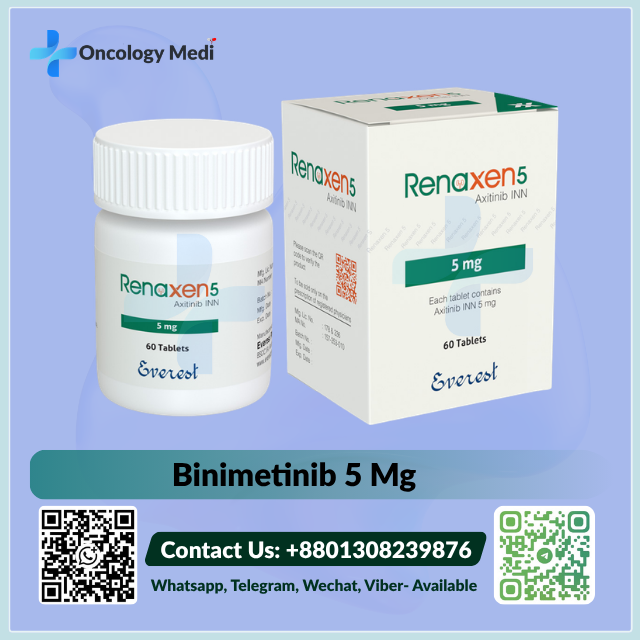
Renaxen 5 mg contains Axitinib, a prescription medicine used to treat certain patients with advanced renal cell carcinoma. It belongs to a group of medicines called kinase inhibitors. Axitinib works by blocking signals that help cancer cells develop new blood vessels.
Renaxen 5 mg may be prescribed alone or with other cancer medicines. The treatment plan depends on the patient’s condition, previous treatment, and the prescribing specialist’s advice.
This page explains Renaxen 5 mg, its active ingredient, uses, dosage information, warnings, possible side effects, and pharmacy ordering process. It helps patients and caregivers understand the medicine before discussing treatment or purchasing it through a legitimate prescription pharmacy.
Important: Renaxen 5 mg is not suitable for self-medication. Use it only with a valid prescription and follow your cancer specialist’s instructions.
Key Benefits of Renaxen 5 mg
Axitinib provides a targeted treatment option for certain patients with advanced kidney cancer.
Its main clinical role includes:
-
Blocking specific signals involved in blood vessel formation.
-
Helping slow the growth of certain cancer cells.
-
Providing an oral treatment option.
-
Supporting treatment plans that may include other cancer medicines.
These are treatment-related actions, not a guarantee of cure or individual results.
Active Ingredient: Axitinib
The active ingredient in Renaxen 5 mg is Axitinib.
Axitinib is a small-molecule kinase inhibitor. It targets vascular endothelial growth factor receptors, including VEGFR-1, VEGFR-2, and VEGFR-3.
These receptors are involved in signals that promote the growth of blood vessels.
Cancer cells may use new blood vessels to support their growth. By blocking VEGF receptor signaling, Axitinib can interfere with this process.
Axitinib is not a general pain medicine, antibiotic, or routine supplement. It is a specialist-prescribed cancer treatment.
How Renaxen 5 mg Works
Axitinib works by inhibiting certain receptor tyrosine kinases. These proteins help transmit signals inside cells.
VEGFR signaling is important for angiogenesis, which means the formation of new blood vessels. Tumors can use angiogenesis to support their growth.
Axitinib blocks VEGFR signaling. This may reduce the blood supply signals that support tumor growth.
The medicine does not work the same way as traditional chemotherapy. It is a targeted therapy, and the treatment decision depends on the cancer type, disease stage, previous medicines, and patient health.
Indications and Uses
Advanced Renal Cell Carcinoma
Renaxen 5 mg contains Axitinib, which is approved for certain patients with advanced renal cell carcinoma.
The official Axitinib prescribing information includes the following treatment uses:
-
In combination with pembrolizumab for first-line treatment of advanced renal cell carcinoma.
-
In combination with avelumab for first-line treatment of advanced renal cell carcinoma.
-
As a single medicine for advanced renal cell carcinoma after failure of one prior systemic therapy.
The approved combination and treatment sequence depend on the applicable prescribing information and the patient’s medical condition.
What Is Renal Cell Carcinoma?
Renal cell carcinoma is the most common type of kidney cancer in adults. It begins in the kidney’s small filtering structures.
Advanced renal cell carcinoma means the cancer has spread beyond the kidney or cannot be treated effectively with local surgery alone.
Treatment may include surgery, targeted therapy, immunotherapy, or other medicines. Axitinib is one targeted treatment used in selected cases.
Dosage and Administration
Only a qualified prescriber should decide the dose of Renaxen 5 mg.
The approved Axitinib prescribing information lists a usual starting dose of 5 mg twice daily for the indicated treatment settings. Combination treatment may have specific administration schedules for the accompanying medicines.
Axitinib doses are taken approximately 12 hours apart, with or without food. Tablets should be swallowed whole with a glass of water.
The prescriber may change the dose based on:
-
Blood pressure.
-
Side effects.
-
Liver function.
-
Other medicines.
-
Treatment response.
-
Individual safety and tolerability.
Dose Adjustments
Dose changes may be needed for certain adverse reactions or drug interactions.
Patients with moderate hepatic impairment may require a lower starting dose. Strong CYP3A4/5 inhibitors can also require dose adjustment.
Never increase, reduce, or stop Axitinib without medical advice.
Missed Dose
If a dose is missed or vomited, follow the instructions provided by the prescribing specialist or pharmacist.
Do not take an extra dose to replace a missed dose unless specifically instructed.
Available Strengths
Axitinib tablets are available in 1 mg and 5 mg strengths under the official INLYTA prescribing information.
Renaxen 5 mg refers to the 5 mg strength. The availability of other Renaxen strengths, pack sizes, and stock must be confirmed with the pharmacy.
Available Pack Sizes
Pack size: To be confirmed.
Do not publish a specific number of tablets or blister strips until the actual Renaxen 5 mg packaging has been verified.
The pharmacy should confirm:
-
Number of tablets per pack.
-
Manufacturer.
-
Batch number.
-
Expiry date.
-
Packaging condition.
-
Product authenticity process.
How to Take Renaxen 5 mg
Take Renaxen 5 mg exactly as prescribed.
General administration information for Axitinib includes:
-
Take the medicine by mouth.
-
Take doses approximately 12 hours apart.
-
It may be taken with or without food.
-
Swallow the tablet whole with water.
-
Follow the same schedule each day.
-
Do not change the dose without medical advice.
Your doctor may provide additional instructions based on your treatment plan.
Who Can Use This Medicine?
Renaxen 5 mg may be prescribed for patients with advanced renal cell carcinoma when Axitinib is considered appropriate.
The prescribing specialist should review:
-
Cancer diagnosis and treatment history.
-
Blood pressure.
-
Liver function.
-
Previous medicines.
-
Risk of blood clots.
-
Risk of bleeding.
-
Current medications.
-
Pregnancy or breastfeeding status.
This medicine is not appropriate for every patient with kidney cancer.
Who Should NOT Use It?
The official Axitinib label lists no formal contraindications. However, that does not mean the medicine is safe for everyone.
A doctor should assess whether Axitinib is suitable for a patient with:
-
Uncontrolled high blood pressure.
-
A history of serious blood clots.
-
Active or recent serious bleeding.
-
Significant liver impairment.
-
Recent surgery or planned surgery.
-
Pregnancy.
-
Breastfeeding.
-
Important medicine interactions.
Patients with untreated brain metastases or recent active gastrointestinal bleeding were not adequately studied in the label’s safety information and require specialist assessment.
Warnings and Precautions
High Blood Pressure
Axitinib can cause high blood pressure, including severe hypertension.
Blood pressure should be well controlled before treatment begins. Patients should have regular monitoring during treatment.
Contact the treating team if blood pressure becomes difficult to control or symptoms such as severe headache, chest pain, or sudden vision changes occur.
Blood Clots
Arterial and venous thromboembolic events have been reported with Axitinib. Some can be serious or fatal.
Tell the doctor about a history of blood clots or cardiovascular disease before starting treatment.
Bleeding
Axitinib can cause bleeding. The medicine has not been adequately studied in patients with untreated brain metastases or recent active gastrointestinal bleeding.
Report unusual bleeding, black stools, vomiting blood, or other concerning symptoms promptly.
Liver Problems
Axitinib is processed mainly through the liver. Patients with liver impairment may require a different starting dose.
The doctor may order liver function tests during treatment.
Surgery and Wound Healing
Axitinib may affect wound healing. Tell the surgeon and cancer specialist if surgery is planned.
The treating team will decide whether the medicine needs to be stopped before or after surgery.
Pregnancy and Breastfeeding
Axitinib may cause fetal harm based on animal studies and its mechanism of action.
Tell your doctor if you are pregnant, planning pregnancy, or could become pregnant.
The official label advises against breastfeeding during treatment.
Possible Side Effects
Axitinib can cause side effects. Some are mild, while others require urgent medical attention.
Common Side Effects
Possible side effects include:
-
Diarrhea.
-
High blood pressure.
-
Fatigue.
-
Reduced appetite.
-
Nausea.
-
Vomiting.
-
Constipation.
-
Voice changes.
-
Hand-foot syndrome.
-
Weight loss.
-
Weakness.
The official prescribing information lists these among common adverse reactions for Axitinib used alone.
Serious Side Effects
Serious risks include:
-
Severe hypertension.
-
Arterial blood clots.
-
Venous blood clots.
-
Serious bleeding.
-
Heart problems.
-
Liver toxicity.
-
Wound-healing complications.
Seek urgent medical help for symptoms such as severe chest pain, sudden weakness, difficulty breathing, severe headache, or significant bleeding.
Do not wait for a routine appointment if serious symptoms develop.
Drug Interactions
Axitinib is metabolized mainly by CYP3A4/5 in the liver. Some medicines can change the amount of Axitinib in the blood.
Strong CYP3A4/5 Inhibitors
Strong inhibitors may increase Axitinib exposure. Examples include:
-
Ketoconazole.
-
Itraconazole.
-
Clarithromycin.
-
Ritonavir.
-
Voriconazole.
The official label recommends avoiding strong CYP3A4/5 inhibitors where possible. If unavoidable, the Axitinib dose may need to be reduced.
Strong CYP3A4/5 Inducers
Strong inducers may reduce Axitinib exposure. Examples include:
-
Rifampin.
-
Carbamazepine.
-
Phenytoin.
-
Phenobarbital.
-
Rifabutin.
-
St. John’s wort.
These medicines should generally be avoided with Axitinib where possible.
Grapefruit
Grapefruit and grapefruit juice may increase Axitinib levels. Avoid them unless your treating specialist provides different advice.
Tell your doctor about every medicine, vitamin, supplement, and herbal product you use.
Storage Instructions
Store Renaxen 5 mg according to the product label and pharmacist’s instructions.
General medicine storage guidance includes:
-
Keep the medicine in its original packaging.
-
Store at the temperature listed on the label.
-
Keep tablets dry.
-
Protect from excessive heat and moisture.
-
Keep away from children.
-
Do not use tablets past their expiry date.
Do not transfer the medicine into an unlabelled container.
Why Buy From Oncologymedi.com?
Oncologymedi.com should focus on accurate information, prescription support, and transparent service.
Recommended trust points include:
-
Clear product and generic information.
-
Prescription verification.
-
Transparent pricing.
-
Product authenticity guidance.
-
Pharmacy support.
-
Clear shipping information.
-
Confidential customer communication.
-
Honest availability updates.
Only publish claims that the pharmacy can verify. If the pharmacy is licensed, display the correct license information. If pharmacist review is available, name the reviewing professional and provide the review date.
Authenticity Guarantee
The pharmacy should provide a clear product authenticity process.
Customers can request confirmation of:
-
Manufacturer.
-
Batch number.
-
Expiry date.
-
Packaging.
-
Product documentation.
-
Verification process.
If the product packaging has a manufacturer verification code, explain how customers can use the official verification channel.
Do not claim that a medicine is genuine based only on a product photograph or seller statement.
Prescription Requirements
Renaxen 5 mg is a prescription medicine.
A valid prescription from a qualified healthcare professional may be required before the pharmacy can process an order.
The pharmacy should confirm:
-
Prescription validity.
-
Patient and prescriber information.
-
Destination-country requirements.
-
Product availability.
-
Applicable pharmacy rules.
A prescription does not guarantee that a particular product is suitable for every patient. Treatment decisions remain with the prescribing specialist.
Conclusion
Renaxen 5 mg contains Axitinib, a prescription kinase inhibitor used for certain patients with advanced renal cell carcinoma.
The medicine works by blocking VEGF receptor signals involved in blood vessel formation. It may be used alone or with other cancer medicines, depending on the prescribed treatment plan.
Patients should understand the dosage instructions, possible side effects, warnings, and drug interactions before starting treatment.
If you need Renaxen 5 mg, contact Oncologymedi.com to confirm product details, prescription requirements, availability, and shipping information.
Renaxen 5 mg should only be used under qualified medical supervision.



Reviews
There are no reviews yet.