

Description
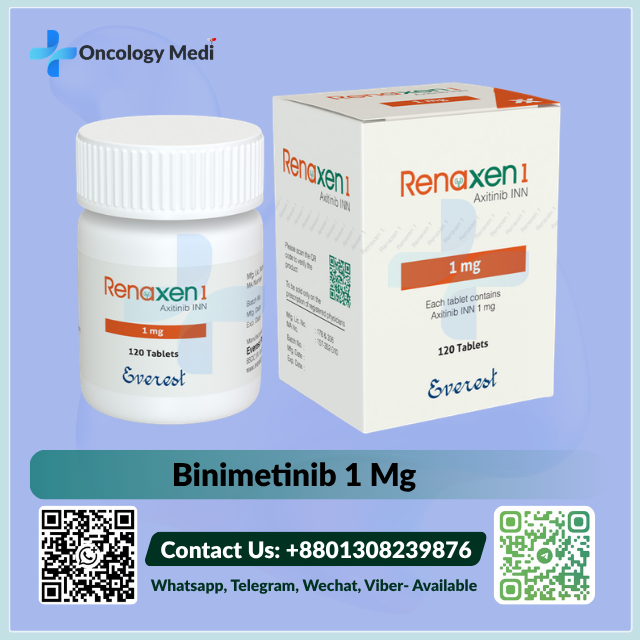
Renaxen 1 mg is identified in your brief as a medicine containing Axitinib. Axitinib is a prescription kinase inhibitor used in certain treatment settings for advanced renal cell carcinoma, a type of kidney cancer. It works by blocking signals that help cancer cells grow and form blood vessels.
Axitinib requires specialist supervision. Treatment decisions depend on the patient’s cancer type, previous treatments, other medicines, and overall condition. A doctor may adjust the dose based on treatment response, side effects, and other medical factors.
This guide provides general information about Axitinib. It does not replace a prescription, oncology consultation, or the official product information for Renaxen 1 mg.
What Is Axitinib?
Axitinib is a targeted cancer medicine. It belongs to a group of medicines called kinase inhibitors.
It blocks certain proteins involved in blood vessel growth and cancer cell signaling. One important target is the vascular endothelial growth factor receptor, or VEGFR. Blocking these signals can help slow the growth and spread of certain cancer cells.
Axitinib is used in the treatment of advanced renal cell carcinoma under specific medical guidance.
What Is Renal Cell Carcinoma?
Renal cell carcinoma is the most common type of kidney cancer in adults. It begins in cells of the kidney.
Advanced renal cell carcinoma may spread to other parts of the body. Doctors choose treatment based on factors such as:
-
Cancer stage.
-
Previous cancer treatments.
-
General health.
-
Kidney and liver function.
-
Other medicines being taken.
-
Treatment goals and possible risks.
Axitinib may be used alone or in combination with other cancer medicines, depending on the treatment plan and applicable approval.
How Does Axitinib Work?
Axitinib blocks VEGF receptors on cells. These receptors help regulate signals involved in blood vessel formation.
Some cancers need new blood vessels to support their growth. By interfering with VEGF receptor signaling, Axitinib can reduce signals that support blood vessel development.
This is called anti-angiogenic treatment.
Axitinib does not work in the same way as traditional chemotherapy. It is a targeted medicine, but targeted treatment can still cause serious side effects.
Uses of Axitinib
The cited U.S. prescribing information includes Axitinib for advanced renal cell carcinoma in specified treatment settings.
Axitinib may be prescribed:
-
As a single medicine after certain previous systemic treatments.
-
In combination with other cancer medicines when approved and appropriate.
-
Under the supervision of an oncology specialist.
The exact approved uses may differ between countries and product labels. Confirm the indication for Renaxen 1 mg using its official local prescribing information.
Dosage and Administration
Do not choose or change an Axitinib dose yourself.
The U.S. prescribing information for INLYTA lists a starting dose of 5 mg twice daily for certain treatment settings. It also lists 1 mg and 5 mg tablets.
This does not establish the correct dose for Renaxen 1 mg. The prescribed dose depends on the treatment plan, previous therapy, liver function, drug interactions, and tolerance.
A doctor may change the dose or temporarily stop treatment if side effects occur.
How to Take Axitinib
Follow the instructions provided by the prescribing doctor and pharmacist.
The cited U.S. label states that Axitinib may be taken with or without food and should be swallowed whole with water.
Important reminders:
-
Take it at the prescribed times.
-
Do not double a dose after a missed dose unless your oncology team instructs you to do so.
-
Do not crush or alter tablets unless specifically advised.
-
Ask your pharmacist what to do if you vomit after taking a dose.
-
Keep a record of medicines and supplements you use.
Who Should Use This Medicine?
Axitinib is intended for patients whose oncology specialist determines that it is appropriate.
The doctor considers the diagnosis, cancer treatment history, medical conditions, and possible medicine interactions.
It should not be started without a valid prescription and appropriate medical assessment.
Warnings and Precautions
Axitinib can cause serious adverse reactions. The official prescribing information includes warnings about the following.
High Blood Pressure
Axitinib can cause hypertension, including severe hypertension.
Blood pressure should be controlled before treatment begins. It should also be monitored during treatment.
Tell your medical team about headaches, dizziness, chest discomfort, or other concerning symptoms.
Blood Clots
Arterial and venous thromboembolic events have been reported.
These events can be serious or life-threatening. Your doctor will consider your medical history and risk factors.
Bleeding
Axitinib can cause bleeding.
Tell your doctor if you have unusual bleeding, black stools, blood in urine, or other concerning symptoms.
Thyroid Problems
Axitinib can affect thyroid function.
Your doctor may order thyroid blood tests before and during treatment.
Liver Problems
Liver enzyme elevations can occur.
Your medical team may monitor liver function through blood tests.
Wound Healing
Axitinib may affect wound healing.
Tell your doctor before planned surgery or invasive procedures. The prescribing information includes instructions about stopping treatment before scheduled surgery.
Pregnancy
Axitinib can harm an unborn baby.
People who may become pregnant should discuss pregnancy prevention with their doctor. Ask the oncology team about pregnancy and breastfeeding precautions.
Possible Side Effects
Axitinib may cause side effects. Not everyone experiences the same reactions.
Common side effects listed in the prescribing information include:
-
Diarrhea.
-
High blood pressure.
-
Fatigue.
-
Reduced appetite.
-
Nausea.
-
Voice changes.
-
Hand-foot syndrome.
-
Vomiting.
-
Constipation.
-
Weight loss.
Some side effects can be managed with medical support. Others may require dose adjustment or treatment interruption.
Serious Side Effects
Seek urgent medical attention for symptoms such as:
-
Severe chest pain.
-
Sudden difficulty breathing.
-
Signs of a stroke.
-
Heavy or unusual bleeding.
-
Severe abdominal pain.
-
Severe headache with confusion or vision changes.
-
Serious allergic symptoms.
This list is not complete. Contact your oncology team promptly about new or worsening symptoms.
Drug Interactions
Axitinib interacts with medicines that affect CYP3A4/5, an enzyme involved in medicine metabolism.
The prescribing information advises avoiding strong CYP3A4/5 inhibitors and strong CYP3A4/5 inducers when possible.
Examples mentioned in the label include certain antifungal medicines, antibiotics, seizure medicines, and other drugs.
Grapefruit and grapefruit juice may increase Axitinib concentrations and should be avoided according to the cited label.
Always tell your doctor and pharmacist about:
-
Prescription medicines.
-
Over-the-counter medicines.
-
Vitamins.
-
Herbal products.
-
Other cancer treatments.
Do not stop another medicine without medical advice.
Storage Instructions
Follow the storage instructions on the Renaxen 1 mg package and official product information.
Keep medicine away from children and pets. Do not use tablets that are damaged, expired, or improperly stored.
Ask a pharmacist how to dispose of unused medicine safely.
Conclusion
Renaxen 1 mg is identified as an Axitinib medicine in your brief. Axitinib is a targeted prescription cancer treatment used in certain settings for advanced renal cell carcinoma.
It requires medical supervision because it can cause high blood pressure, bleeding, blood clots, thyroid problems, liver problems, and other serious reactions.
Use only the dose prescribed by your oncology specialist. Discuss side effects, interactions, pregnancy precautions, and monitoring with your medical team.
For accurate product-specific information, review the official Renaxen 1 mg labeling and consult a qualified pharmacist.

Reviews
There are no reviews yet.